More Recipes
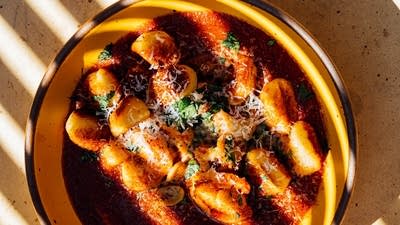
At least 90 percent of the time when I cook gnocchi, I sear it first (also known as pre-searing, see table, A Brief Summary of Fire-Driven Cooking Methods, page 40). It’s my preferred way to cook this pasta before I toss it with a sauce or into a salad (seared gnocchi makes an excellent crouton substitute); the combination of a crispy outside and pillowy-soft inside makes it irresistible. In this dish, the shrimp also get pre-seared, with a hint of smokiness from the Kashmiri chilli. The trick to searing in a skillet is to avoid overcrowding the food, or the moisture released will make the food soggy instead of crisp.
This recipe feeds two people well, but you can also stretch it to four if you serve it with a hearty salad such as the Grilled Portobello Mushroom Salad with Pomegranate Vinaigrette (page 68).
Makes 2 to 4 servings
INGREDIENTS
GNOCCHI
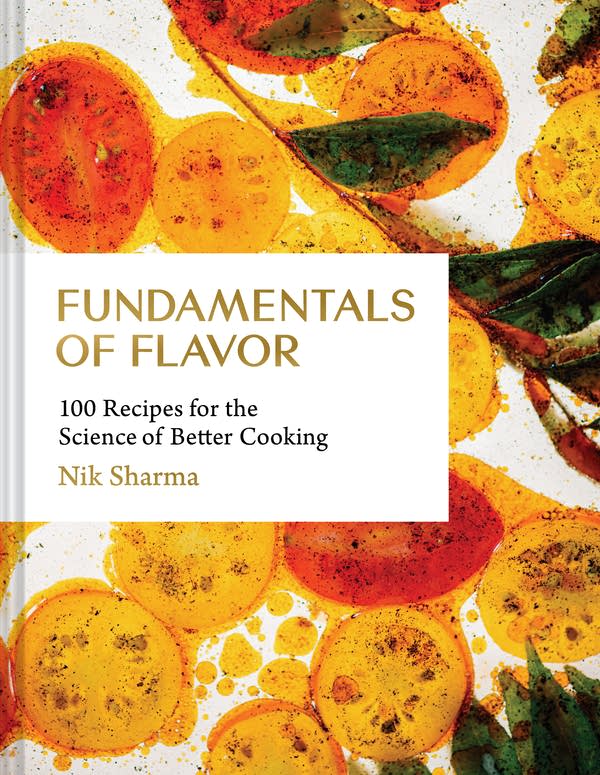 Fundamentals of Flavor: 100 Recipes for the Science of Better Cooking
Nik Sharma
1 Tbsp unsalted butter
1 Tbsp extra-virgin olive oil
12 oz [340 g] gnocchi
TOMATO SAUCE
One 14½ oz [410 g] can peeled whole plum tomatoes, undrained
½ cup [6 g] tightly packed basil leaves
2 Tbsp extra-virgin olive oil
3 or 4 anchovies, smashed to a paste (see following)
2 garlic cloves, grated
1 tsp red pepper flakes
Fine sea salt
Sugar for seasoning
SHRIMP
1 lb [455 g] peeled and deveined raw large shrimp, thawed if frozen
1 tsp Kashmiri chilli powder (see following)
Fine sea salt
2 Tbsp extra-virgin olive oil, plus extra as needed
4 garlic cloves, thinly sliced
2 Tbsp red wine vinegar
2 Tbsp chopped flat-leaf parsley
2 Tbsp grated Parmesan
DIRECTIONS
To make the gnocchi, melt the butter in a large stainless steel or cast iron skillet over medium heat. The butter will begin to foam and crackle. Cook until the liquid stops crackling and the milk solids turn golden brown, 4 to 5 minutes. Add the olive oil. Add the gnocchi and pan-fry until golden brown and crisp, flipping occasionally with a spatula, 8 to 10 minutes. Transfer the gnocchi to a bowl and keep warm. Wipe the skillet clean and return it to the stove.
To make the tomato sauce, using an immersion or high-speed blender, in a medium bowl, or in the blender, blend the tomatoes with the can’s juices and the basil leaves until smooth and keep aside. In a large saucepan over medium heat, heat the olive oil. Add the anchovies, garlic, and red pepper flakes and sauté until fragrant, about 1 minute. Stir in the tomato mixture and bring to a boil, then turn the heat to low and simmer for 1 minute. Taste and season with salt and sugar as needed. The sauce should taste savory with a mild hint of heat and sweetness. Keep warm.
To make the shrimp, in a medium mixing bowl, toss the shrimp with the Kashmiri chilli powder and a pinch of salt. Let sit for 4 minutes.
Turn the heat to medium-high under the cleaned-out skillet and heat the olive oil. Add the shrimp and cook until they turn opaque and pink, 2 to 3 minutes per side, using tongs to flip the shrimp and working in batches if needed to avoid crowding the pan. When cooked, push the shrimp to one side of the pan and turn the heat to low. Drizzle in a bit of oil if the empty side of the pan is dry and sauté the garlic until lightly golden, about 1 minute. Toss the shrimp and garlic together and drizzle on the vinegar, stirring up any browned bits from the bottom of the pan.
To serve, transfer the tomato sauce to a serving bowl. Place the gnocchi and shrimp on top. Garnish with the parsley and Parmesan and serve immediately.
Leftovers can be stored in an airtight container in the refrigerator for up to 4 days.
THE FLAVOR FILES
To make a smooth anchovy paste, mash the fillets with the flat side of a chef’s knife on a cutting board, dragging and pressing until they form a paste. For an even silkier result, finish by grinding with a mortar and pestle.
Diced and lightly pan-fried seitan also works as a vegetarian protein option instead of shrimp.
I prefer Kashmiri chilli powder here for its bright red color, mild heat, and rich smoky profile. You can substitute ¾ tsp smoked sweet paprika plus ¼ tsp ground cayenne for every 1 tsp of Kashmiri chilli powder.
Reprinted from Fundamentals of Flavor: 100 Recipes for the Science of Better Cooking by Nik Sharma with permission by Chronicle Books, 2026
When you shop using our links, we earn a small commission. It’s a great way to support public media at no extra cost to you!
Before you go...
Each week, The Splendid Table brings you stories that expand your world view, inspire you to try something new, and show how food connects us all. We rely on your generous support. For as little as $5 a month, you can have a lasting impact on The Splendid Table. And, when you donate, you’ll join a community of like-minded individuals who love good food, good conversation, and kitchen companionship. Show your love for The Splendid Table with a gift today.
Thank you for your support.
Donate today for as little as $5.00 a month. Your gift only takes a few minutes and has a lasting impact on The Splendid Table and you'll be welcomed into The Splendid Table Co-op.