More Recipes
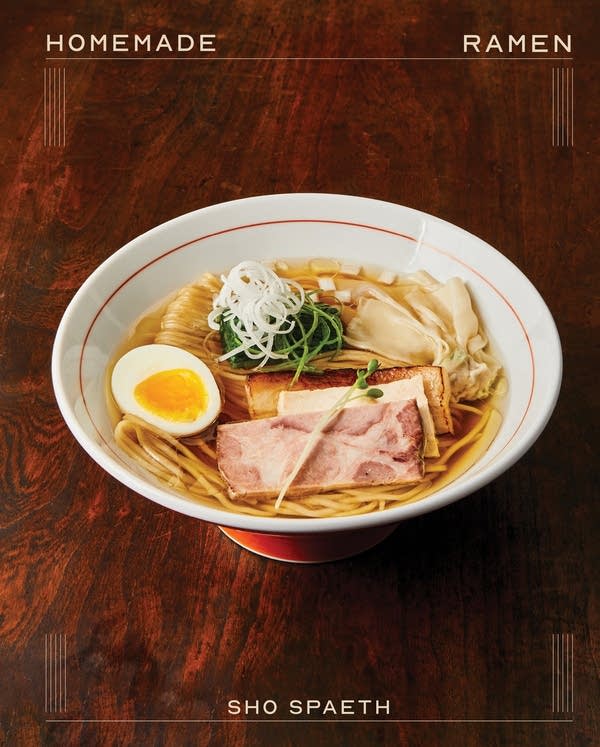
Think of this bowl as a starter niboshi ramen. Niboshi are infused into the stock, tare, and an aromatic oil. The tare is excellent in almost any stock for ramen, since it’s packed with kombu, katsuobushi, oyster sauce, fish sauce, shiitake—a grab bag of glutamates, inosinates, and guanylates. The same is true of the niboshi oil, but if you are new to niboshi flavor, you may want to start off with a teaspoon or so.
A lot of people recommend gutting and deheading niboshi before making stock or tare with them, as the guts and head have a stronger, more bitter flavor. For a more refined niboshi flavor, you can use an equivalent weight of gutted and beheaded niboshi in any recipes that call for them. Gutting and deheading them is a simple, if slightly tedious process: Simply pinch off the heads and the dark stuff around the belly with your fingers. You can save the heads and bellies for use in nibo oil and “Dirty Paste” (see page 287).
Since niboshi produces a strong flavor profile, it helps to have a thick stock, so I include a pig’s foot along with a whole chicken to increase the concentration of gelatin. This stock should form an almost opaque gel when chilled; it should clear once heated. The pig’s foot can be removed from the stock and turned into a terrine (see page 292); the instructions in this recipe call for wrapping the foot in cheesecloth to facilitate removing it in one piece for that purpose.
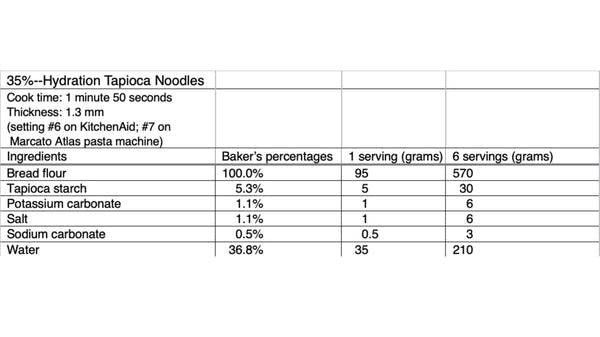
I call for firm, relatively low-hydration noodles for this bowl; be sure to read the noodle sheeting instructions (see page 162) carefully, as these are actually the most difficult noodles to make in the book.
Suggested toppings are: Braised Belly Chashu (page 277) or Pork Shoulder Chashu (page 282), Pork Wontons (page 288), Blanched Spinach (page 290), and Super Simple Ajitama (page 284).
This is a trickier bowl to construct than the Classic Shoyu (page 179) because it calls for wontons. Time the wonton cooking so they’re done right after the noodles. (A noodle basket is handy for this: drop the noodles into the basket and add them to the boiling water along with the wontons, which you can scatter around the pot. By the time you drain the noodles and add them to the ramen, the wontons will be cooked and ready to go.) You could also boil the wontons first and transfer them, along with a cup of the boiling water, to a bowl to stay warm. This is not ideal, but it’s convenient, and they’ll survive (this is how I make my lunches); drain them before using.
For each bowl of ramen, you need:
 Homemade Ramen
Sho Spaeth
Homemade Ramen
Sho Spaeth
350 ml (11/2 cups) Tontorinibo Stock (See below)
1 serving 35%-Hydration Tapioca Noodles (See below)
3 or 4 Pork Wontons (See below)
2 tablespoons (30 ml) Nibo Tare (See below)
1 tablespoon plus 1 teaspoon (20 ml) Aromatic Lard (See below)
⅛ teaspoon (0.4 g) Diamond Crystal kosher salt, or more to taste
Pinch of white pepper
2 teaspoons (10 ml) Nibo Oil (page 191) (See below)
Splash of toasted sesame oil
Thinly sliced scallions or naga negi
Bring the noodle cooking water to a boil. Bring the soup stock to a simmer.
Add the wontons and noodles to the boiling water and set a timer for 2 minutes. Bring the stock to a boil.
Add the tare, lard, salt, and white pepper to a warmed serving bowl. Pour in the boiling stock. Taste and add more salt if necessary.
Once the noodles are cooked, drain thoroughly and add to the bowl. Using chopsticks, loosen the noodles and fold them once or twice over themselves to distribute the soup seasoning and form a platform for the toppings.
Top the noodles with any desired toppings, along with the drained cooked wontons. Add the nibo oil and splash of toasted sesame oil, drizzling them around the perimeter of the bowl. Top with sliced scallions or naga negi and serve.
Tontorinibo Stock
Yield: About 21/2 quarts (2.3 liters)
Soaking: 6 to 12 hours
Total cook time (pressure cooker): 3 hours, plus time for coming to pressure/depressurizing
Total cook time (stovetop): 8 hours
Active time: 15 minutes
1 ounce (30 g) niboshi
One 3-inch square piece of kombu (6 g)
3 quarts plus 1/2 cup (2.9 liters) water, divided
One 3- to 4-pound (1.8 kg to 2.3 kg) whole chicken, cut into parts
1 small (about 1 pound/450 g) pig’s foot, scrubbed clean and any hair singed or shaved off
A 3-inch piece of ginger, peeled, divided
1 head garlic, separated into cloves (about 14) and peeled, plus 5 garlic cloves, peeled, divided
1 large onion, peeled and roughly chopped
10 scallions, cut into 2-inch lengths
4 leaves Napa cabbage
The day before you make the stock: Combine the kombu and niboshi with 2 cups (480 ml) water in a sealable container and refrigerate for at least 6 hours, preferably overnight (12 hours).
The day you make the stock: Wrap the pig’s foot in several layers of cheesecloth and tie tightly with kitchen twine at 2-inch intervals.
Add the chicken to a pressure cooker or stockpot, along with a 1-inch piece of the ginger and the cloves from the head of garlic. Put the wrapped pig’s foot on top.
Add the remaining 101/2 cups (2.5 liters) water to the cooker. Do not exceed the maximum fill line. If using a stockpot, you may need to add water to cover the contents.
If using a pressure cooker: Seal the lid and bring to high pressure. (If using a stovetop pressure cooker, bring it to pressure over medium-high heat.) Cook at pressure for 2 hours, then turn off the heat and allow the pressure cooker to depressurize naturally. Remove the lid and set aside.
If using a stockpot: Bring the contents of the pot to a boil over high heat, then reduce the heat to low/medium-low to maintain a weak simmer, with small bubbles regularly rising to the surface of the liquid (about 206°F/96°C), and cook for 7 hours.
Remove the pig’s foot and reserve for another use, such as the terrine (page 292), or discard. Add the remaining ginger and garlic cloves, along with the onion and scallions, to the pot. Layer the cabbage leaves over the top and cook for 30 minutes. Turn off the heat.
Add the kombu and soaking liquid to the pot. Using tongs or chopsticks, gently swish the kombu through the hot stock. Let steep for 30 minutes.
Set a half sheet pan on a wire cooling rack and set a large metal mixing bowl on top of the pan. Strain the stock through a cheesecloth-lined fine-mesh strainer into the bowl; discard the solids. Let cool to room temperature, about 1 hour, then transfer the stock to sealable storage containers and refrigerate until completely chilled, at least 4 hours.
Spoon the solidified fat off the top of the stock and reserve for another use or discard.
35%-Hydration Tapioca Noodles
 35%-Hydration Tapioca Noodles
Sho Spaeth
35%-Hydration Tapioca Noodles
Sho Spaeth
Pork Wontons
Yield: About 70 wontons
Total cook time: 3 to 5 minutes
Active time: 1 to 2 hours (depends on proficiency)
For the filling:
8 ounces (230 g) ground pork
8 scallions (about 60 g), thinly sliced
A 2-inch piece of ginger, peeled and grated
2 garlic cloves, peeled and grated
2 teaspoons (10 ml) koikuchi soy sauce
1 teaspoon (5 ml) mirin
1 teaspoon (3 g) sugar
1 teaspoon (3 g) Diamond Crystal kosher salt, or to taste
About 70 wonton wrappers (store-bought)
Cornstarch for dusting
I like wontons mostly for their skins, so I use only a small amount of filling. If you add a lot, you will have to adjust the cooking time significantly upward (and the yield will be lower). If you’re in doubt about whether they’re cooked or not, split one open, or check the temperature with an instant-read thermometer; it should be above 150°F (65°C). If you want thinner wonton skins, liberally apply starch to the surface of the skins, stack three on top of each other, and run them through progressively thinner settings on a pasta machine to thin them out. (See page 135 for more on wontons.)
If you substitute ground chicken for the pork, I strongly recommend coarsely grinding the chicken (thighs and leg meat) yourself or finely chopping it rather than using store-bought ground chicken.
For the filling: Combine the ground pork, scallions, ginger, garlic, soy sauce, mirin, sugar, and salt in a medium mixing bowl and, using clean hands, mix thoroughly for about 3 minutes.
Place a grape-sized ball of the ground meat mixture on a plate and microwave for 15 seconds on high, or fry in a nonstick pan over medium heat, turning once, until cooked through, about 2 minutes. Taste for seasoning; it should be a little saltier than you’d like.
Cover the mixture and refrigerate for at least 6 hours, preferably overnight (12 hours). Alternatively, you can immediately proceed to step 4.
Set up your wonton wrapping station: Dust two half sheet pans with a layer of cornstarch. Fill a small ramekin with cold water. Set out the wonton skins and filling. If you refrigerated the filling, using a spoon, give it a good stir.
Place a heaping teaspoon of filling in the center of a wonton skin, wet its edges with water, and fold over into a rectangle, or fold it on the diagonal to make a triangle, and press the edges together to seal, making sure to avoid incorporating air pockets. Place the wonton on one of the prepared sheet pans and repeat with the remaining wonton skins and filling.
Place the sheet pans in the freezer until the wontons are frozen solid, about 4 hours. Transfer the wontons to zip-top freezer bags and freeze until ready to use.
To cook the wontons, bring a large pot of water to a boil over high heat. Add the wontons and cook until the skins are tender and the filling is cooked through, 3 to 5 minutes. Drain.
Nibo Tare
Yield: About 1¾ cups (400 ml)
Soaking time: 6 to 12 hours
Total cook time: 10 minutes
Active time: 15 minutes
1½ cups (350 ml) koikuchi soy sauce, divided
0.35 ounce (10 g) niboshi
A 3-inch square of kombu (6 g)
1 dried shiitake mushroom (3 g)
1 cup (240 ml) sake
0.2 ounce (6 g) katsuobushi
2 tablespoons (30 ml) mirin
2 tablespoons (30 ml) fish sauce
3 tablespoons (27 g) Diamond Crystal kosher salt
1 tablespoon plus 1 teaspoon (20 ml) oyster sauce
1 tablespoon (10 g) sugar
Combine 1 cup (240 ml) of the soy sauce, the niboshi, kombu, and shiitake in a resealable container and refrigerate for at least 6 hours, preferably overnight (12 hours).
Turn on your hood vent if you have one. Add the sake to a small saucepan and bring to a boil over high heat. Reduce the heat to medium-high and, using a long match or a kitchen lighter, carefully ignite the area above the boiling liquid, and cook until the flame dies down completely, 1 to 2 minutes.
Shake the container of soy sauce mixture several times, then transfer it to the saucepan. Cook until faint bubbles start to form around the edges of the pan (140° to 150°F/60° to 65°C), about 3 minutes. Remove the kombu; reserve for another use or discard.
Continue heating the mixture until it is steaming hot and bubbles have formed all around the edges of the pan (185°F/85°C). Shut off the heat, add the katsuobushi, and let the mixture steep for 3 minutes.
Strain the mixture into a small metal mixing bowl. Add the remaining ½ cup (110 ml) soy sauce, the mirin, fish sauce, salt, oyster sauce, and sugar and stir until the salt is dissolved, about 1 minute. Transfer to a sealable container and refrigerate until ready to use.
Aromatic Lard
Makes 1 cup (240 ml)
Total cook time: 15 minutes
Active time: 10 minutes
1 cup (240 ml) rendered lard (see pages 59 and 111–12)
1 head garlic, separated into cloves, peeled, smashed, and roughly chopped
A 3-inch piece of ginger, peeled and minced
Combine the ingredients in a 2-quart saucepan and heat over medium-high heat, stirring occasionally, until the garlic and ginger begin to sizzle. Then cook, stirring constantly, until the garlic and ginger start to take on color, about 5 minutes.
Strain the lard through a fine-mesh strainer set over a small mixing bowl. (The fried garlic and ginger can be reserved for another use or discarded.) Let cool to room temperature, then transfer to a sealable container and refrigerate until ready to use.
Nibo Oil
Yield: About 1½ cups (350 ml)
Total cook time: 10 minutes
Active time: 15 minutes
1⅔ cups (400 ml) neutral oil
1 ounce (30 g) niboshi, torn by hand or clipped with scissors into small pieces
3 bunches scallions (180 g), thinly sliced
Combine the oil and niboshi in a 3-quart saucier and heat over medium-high heat until it registers 300°F (148°C) on an instant-read thermometer.
Add the scallions a handful at a time, pausing if the oil begins to foam up precipitously. Cook until the scallions smell sweet and just start to take on a brown color, about 8 minutes.
Pour the oil through a fine-mesh strainer into a medium metal mixing bowl. (If desired, reserve the solids for Dirty Paste, page 287.) Let the oil cool to room temperature, then transfer to a sealable container and refrigerate.
Excerpted from Homemade Ramen. Copyright ©2025 by Sho Spaeth. Used with permission of the publisher, W. W. Norton & Company, Inc. All rights reserved.
When you shop using our links, we earn a small commission. It’s a great way to support public media at no extra cost to you.
Before you go...
Each week, The Splendid Table brings you stories that expand your world view, inspire you to try something new, and show how food connects us all. We rely on your generous support. For as little as $5 a month, you can have a lasting impact on The Splendid Table. And, when you donate, you’ll join a community of like-minded individuals who love good food, good conversation, and kitchen companionship. Show your love for The Splendid Table with a gift today.
Thank you for your support.
Donate today for as little as $5.00 a month. Your gift only takes a few minutes and has a lasting impact on The Splendid Table and you'll be welcomed into The Splendid Table Co-op.