More Recipes
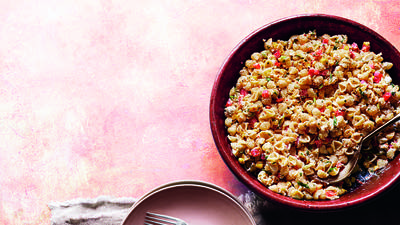
An Italian contorno that combines two of our favorite things: perfectly prepared beans and cooked greens. A cima puree, essentially more blanched greens blended with olive oil until silky, holds everything together while staying on brand. The combination tastes creamy, vital, and very Italian.
It’s important to use home-cooked chickpeas and heavily blanched cavolo so the cooking liquor from both can be added as needed when you bring everything together.
Serves 4 to 6
INGREDIENTS
Salt
 The King Cookbook
Clare de Boer, Jessica Shadbolt, Annie Shi
The King Cookbook
Clare de Boer, Jessica Shadbolt, Annie Shi
2 bunches Tuscan or lacinato kale (about 1. pounds), stems discarded
4 garlic cloves, one left whole, the others thinly sliced
Olive oil
2 good pinches crushed dried red chili, preferably Calabrian
2 cups drained cooked chickpeas
1 cup Cima Puree (see below), plus more if needed
DIRECTIONS
Bring a medium pot of salted water, with a clove of garlic, to a boil over high heat. When rumbling, add the kale and boil until completely soft, about 15 minutes (definitely longer than you might think!). Meanwhile, set a colander in the sink.
Transfer the soft greens to the colander and press on them to release all their water. Once they are cool enough to handle, wring the leaves dry, then use a kitchen towel to blot them bonedry. Thinly slice the kale and set aside.
Add ½ cup olive oil to a medium heavy pot set over low heat, then add the sliced garlic, chili, and a generous pinch of salt and cook until the garlic softens and turns sticky but doesn’t color, less than a minute. Add the kale, stirring to coat all the greens, and braise gently until they have no bite whatsoever, about 10 minutes.
Stir in the chickpeas and cook, stirring gently, until the flavors meld, about 5 minutes. Add the cima puree and warm it through, a minute or two. Turn off the heat, taste for salt, and adjust as needed. Drizzle generously with olive oil and serve warm or at room temperature.
Cavolo Nero Puree (and Cima Puree)
A puree that is as much about greens as it is about olive oil. We use our fresh-press olive oil here and we recommend that you use a similarly good bottle. It’s important to squeeze all the water from boiled leaves before dressing them. It primes them to fully absorb the oil’s flavor. To turn the cavolo nero puree into a cima puree, just swap in broccoli rabe (cima in Italian) for the kale.
Makes 3 cups
Salt
2 garlic cloves
2 bunches (about 1 pound) cavolo nero or lacinato kale, stems removed
Olive oil (at least 1 cups)
Fill a large pot with salted water. Add the garlic and bring the water to a rumbling boil over high heat. Add the cavolo nero and boil until its leaves can be easily squashed against the side of the pot, 10 to 15 minutes. Transfer the leaves to a colander to drain; retain the poached garlic and at least ¼ cup of the blanching water. (If using broccoli instead of cavolo nero [see headnote], shave a few minutes from the cook time—but check that the stems have absolutely no bite before turning off the heat.)
Thoroughly squeeze the leaves dry to wring out any remaining water. Roughly chop them and then add them and the poached garlic to a food processor. Run the blade until a smooth puree forms. With the blade still running, gradually blend in 2 tablespoons of the reserved blanching water to loosen the puree slightly. Then, with the processor running, slowly pour in the olive oil, adding 1½ to 2 cups, or enough so a glossy puree forms. Turn off the machine, taste, and season with salt. Blitz in more splashes of the reserved water and/or additional olive oil if necessary. If you’re not using it straightaway, cover the puree with a thin film of olive oil to prevent oxidation. Sealed and held in the fridge, it keeps for 1 to 2 days.
Excerpted from THE KING COOKBOOK by Clare de Boer, Jessica Shadbolt, and Annie Shi. Copyright © 2025 by Clare de Boer, Jessica Shadbolt, and Annie Shi. Reprinted with Permission from Flatiron Books. All rights reserved.
When you shop using our links, we earn a small commission. It’s a great way to support public media at no extra cost to you.
Before you go...
Each week, The Splendid Table brings you stories that expand your world view, inspire you to try something new, and show how food connects us all. We rely on your generous support. For as little as $5 a month, you can have a lasting impact on The Splendid Table. And, when you donate, you’ll join a community of like-minded individuals who love good food, good conversation, and kitchen companionship. Show your love for The Splendid Table with a gift today.
Thank you for your support.
Donate today for as little as $5.00 a month. Your gift only takes a few minutes and has a lasting impact on The Splendid Table and you'll be welcomed into The Splendid Table Co-op.