Ingredients
From Cooking Green: Reducing Your Carbon Footprint in the Kitchen—the New Green Basics Way by Kate Heyhoe.
Copyright 2009 by Kate Heyhoe
Serves 3–4
Green Meter
Green Goodness: No-cook sauce and passive pasta save fuel and keep kitchen cooler; meat-free
Prep/Cooking Times: 10 minutes prep + 15 minutes cooking, mostly unattended
Prime Season: Year-round
Conveniences: Quick & easy; few ingredients
New Green Basic: Use passive cooking to replace old fullfuel method for pasta; use the sauce as inspiration for other no-cook or meatless sauces.
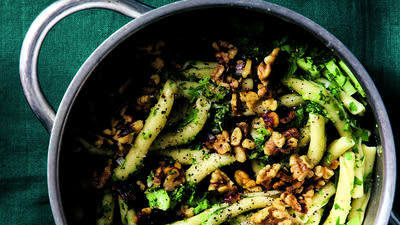
The "2-Minute" part of the pasta title refers to boiling time over live heat. Conventional recipes call for 8–10 minutes active boiling, but I prefer these results. Letting the pasta finish cooking passively, with heat turned off, uses less fuel and also prevents overcooking, ensuring al dente tenderness with proper toothiness. You can chop the pesto ingredients in a hand blender, food processor, by hand, or grind in a mortar and pestle.
Feta Pesto (makes 1 cup):
2 cloves garlic
1 cup fresh flat-leaf parsley (1 ounce), tough lower stems removed
½ cup shelled walnut halves or pieces (2 ounces)
1 cup crumbled feta (2 ounces)
¼ cup extra-virgin olive oil
½ teaspoon coarsely ground black pepper
2 teaspoons white or red wine vinegar
2 teaspoons salt
12 ounces dried spaghetti
1. If using a hand blender or small food processor, finely chop the garlic. Add the parsley and coarsely chop. Add the walnuts and chop until grainy. Add ½ cup of the feta and all of the oil. Process just until the mixture turns to a coarse paste. Pulse in the pepper just until combined. Set aside, and stir in the vinegar just before tossing with the pasta (to prevent discoloration).
2. Fill a large pot with about 5 quarts water and the salt. Cover and bring to a boil over medium-high heat. Stir in the spaghetti until completely submerged. Partially cover and cook 2 minutes, making sure the water doesn't boil over. Stir again to mix up the pasta. Cover, turn off the heat, and let stand until al dente, 8 minutes. (Remove the pot from an electric burner, so it doesn't boil over from residual heat.) Taste to see if the pasta is al dente; if not, allow another 1–2 minutes. Scoop out the pasta to drain.
3. When the pasta is mostly drained, toss with the pesto. If the mixture seems dry, mix in a spoonful of the pasta cooking water. Serve warm or at room temperature, passing remaining ½ cup feta on the side.
Instructions
Before you go...
Each week, The Splendid Table brings you stories that expand your world view, inspire you to try something new, and show how food connects us all. We rely on your generous support. For as little as $5 a month, you can have a lasting impact on The Splendid Table. And, when you donate, you’ll join a community of like-minded individuals who love good food, good conversation, and kitchen companionship. Show your love for The Splendid Table with a gift today.
Thank you for your support.
Donate today for as little as $5.00 a month. Your gift only takes a few minutes and has a lasting impact on The Splendid Table and you'll be welcomed into The Splendid Table Co-op.